October 13, 2026
Custom Webflow Website vs Template: Which Wins?

Webflow vs Shopify: Which Platform Wins for UK E-commerce Brands?
Webflow vs Shopify for UK e-commerce brands in 2026 - an honest comparison covering design flexibility, SEO, sales features, costs, and which platform is right for your type of store.

When UK e-commerce brands compare Webflow and Shopify, they usually frame it as a pure design question: "Which one looks better?" That is entirely the wrong starting point.
The right question to ask yourself is: "What is my business model, and which platform is fundamentally built to support it?"
To break down which platform takes the crown, we have evaluated them across the four pillars of modern digital commerce: design, native e-commerce capabilities, search performance, and total platform costs.
Webflow wins, clearly. Every single element of every page-including product listings, custom collection pages, the shopping cart, and the slide-out checkout-can be built with complete creative visual freedom.
Shopify's overall presentation layout is inherently constrained by its structured theme architecture. Even with an expensive premium theme and specialized developer customisation, achieving true, compromise-free design freedom on Shopify requires extensive custom Liquid development work.
Shopify wins, decisively. Shopify natively supports advanced multi-currency conversion scales and multi-language storefront variations right out of the box.
Furthermore, Shopify provides robust native Point of Sale (POS) tools for brick-and-mortar physical retail setups, high-volume inventory management systems, recurring subscription models, a massive global app ecosystem, and highly advanced sales analytics. Webflow e-commerce remains functional, but primarily for smaller, simpler product selections.
Both platforms are capable, but for entirely different technical reasons. Shopify handles the core e-commerce indexation fundamentals adequately out of the box.
However, Webflow's organic SEO performance is exceptional. It boasts hyper-fast page loading speeds, extremely clean and lightweight semantic HTML code, granular visual control over every single on-page SEO meta element, and a powerful native CMS that accommodates content marketing smoothly.
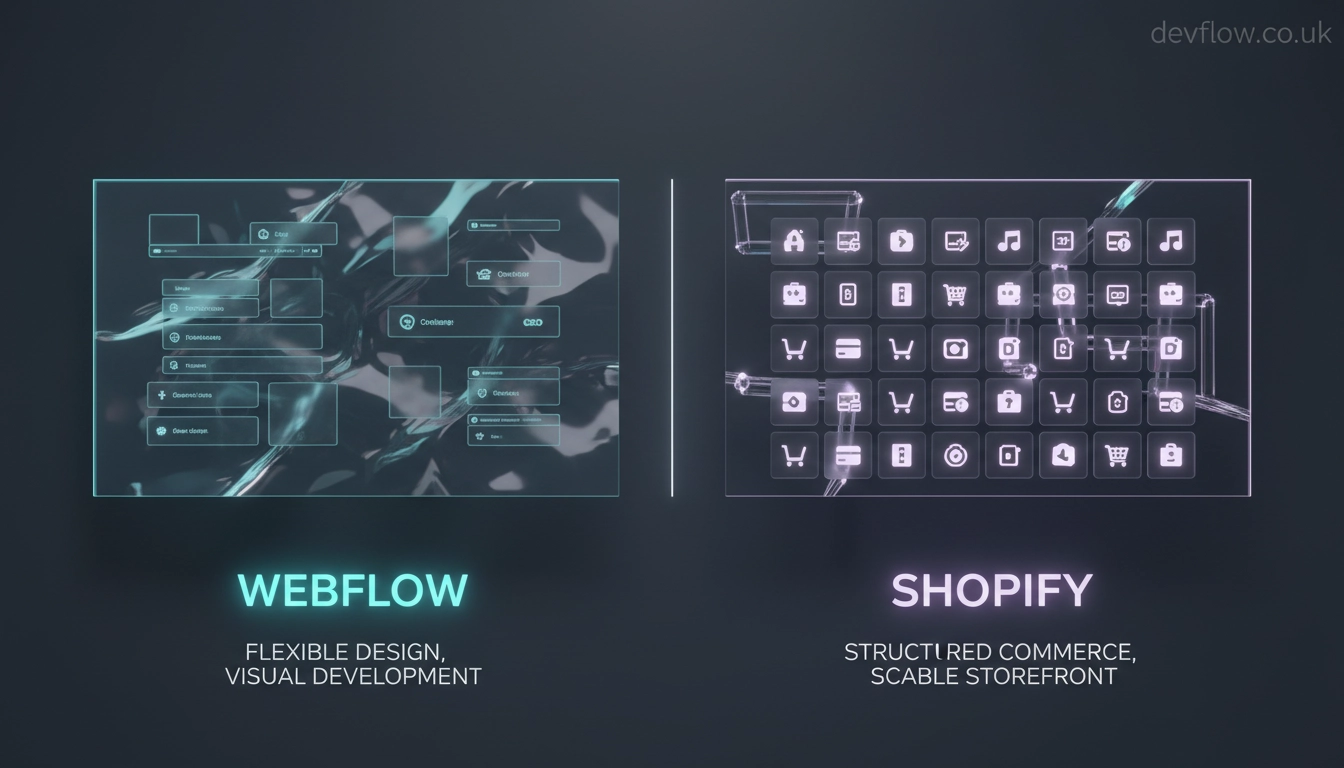
Shopify remains the industry titan for standard, operations-heavy retail architectures. You should lean toward it if your company matches any of these criteria:
Webflow is the ideal environment for boutique, visual-first brands. Choose this option if your brand aligns with the following goals:
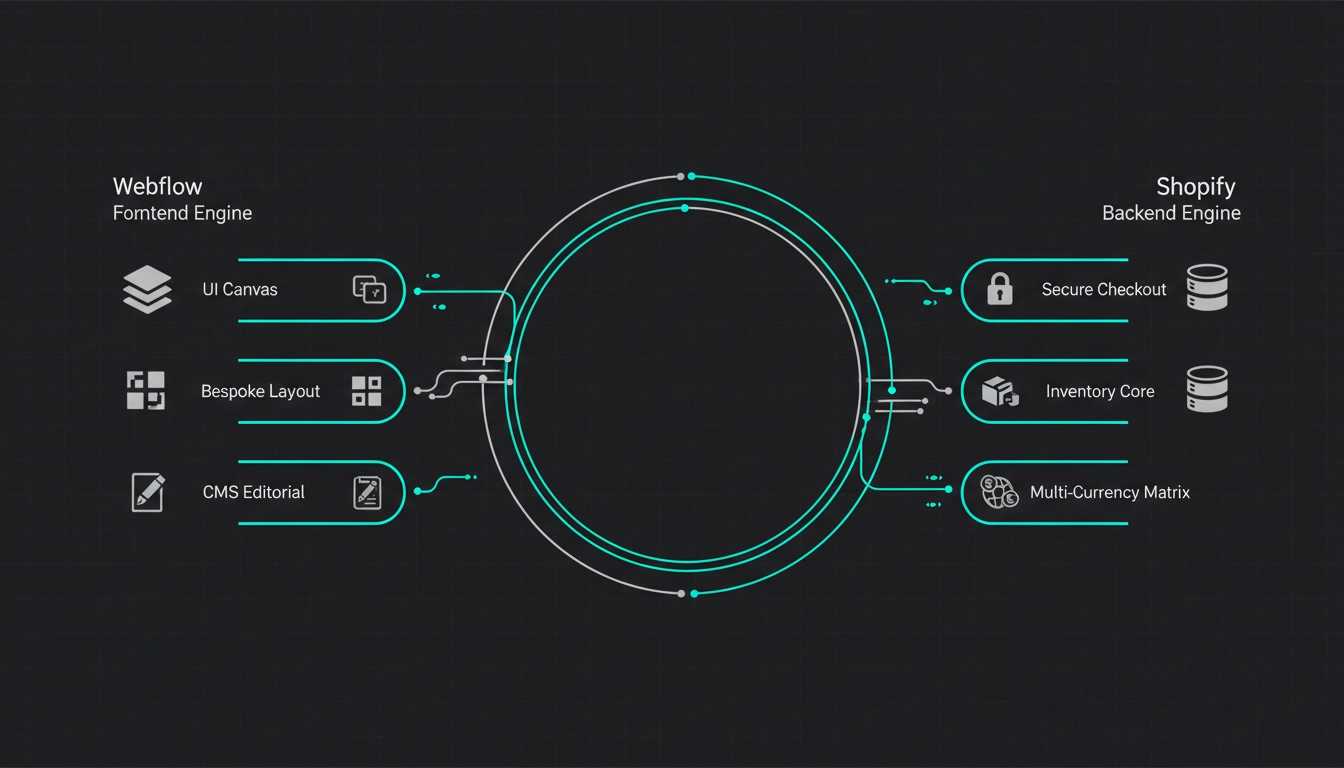
An increasingly popular architectural approach for high-growth UK brands is to utilize Webflow as the frontend marketing and editorial engine, while maintaining Shopify as the hidden commerce database backend.
By connecting the two systems through Shopify's secure Buy Button or via an advanced Headless Storefront API, you unlock the absolute best of both worlds. This setup awards you Webflow's high-converting layout advantages for content pages, coupled with Shopify's industry-standard security and checkout infrastructure for the transactional experience.
Not sure which platform is right for your UK e-commerce brand? Book a free 30-minute strategy call with Devflow. We will look at your business model and give you an honest recommendation. [Book Your Free Strategy Call]
Share
Explore more insights from our team to deepen your understanding of digital strategy and web development best practices.
Book now
Let’s discuss your goals, map out a strategic execution plan, and turn your website into a growth engine for your business.