October 13, 2026
Custom Webflow Website vs Template: Which Wins?

Webflow vs WordPress: Which Should UK Businesses Choose in 2026?
Webflow vs WordPress — which is right for your UK business in 2026? We compare speed, cost, SEO, flexibility, and ease of use so you can make an informed decision. No bias, just facts.
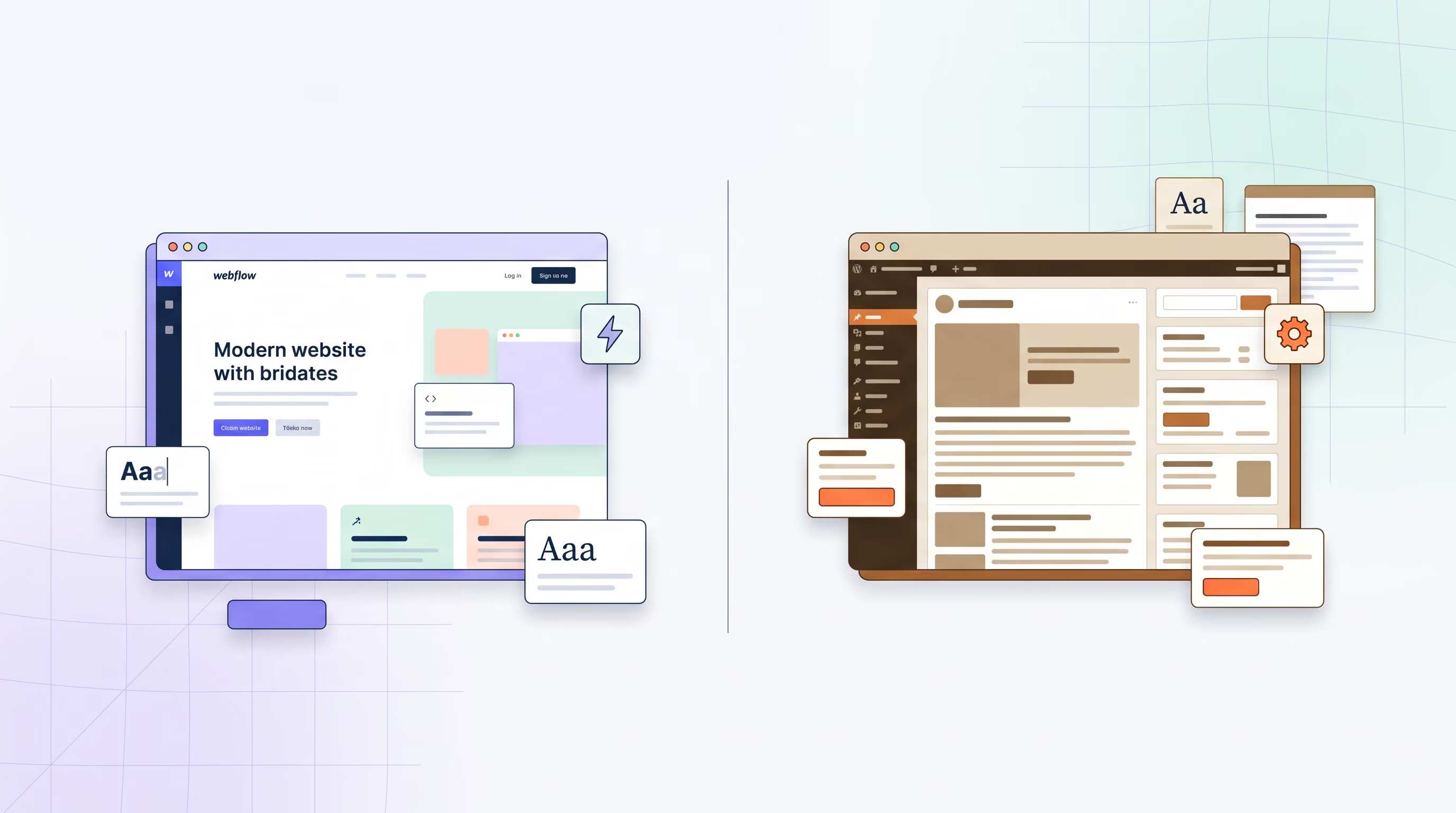
Most "Webflow vs WordPress" articles are written by agencies who have already decided which platform they want to sell you. Devflow specialises in Webflow - so we have a natural perspective. But we also talk to businesses who would genuinely be better served by WordPress. Our goal is to help you make the right call, not to win your business on the wrong project.
WordPress was built as a blogging platform in 2003 and evolved into a general-purpose CMS. It powers approximately 43% of all websites on the internet. That ubiquity is both its greatest strength and its greatest weakness.
Webflow launched in 2013 with a specific mission: give designers and small teams the power to build professional, responsive websites visually - without sacrificing code quality.
Webflow wins here.
Webflow hosts your site on a global CDN with automatic SSL, image optimisation, and clean, semantic HTML output as defaults. A well-built Webflow site will routinely score 90+ on Google PageSpeed Insights without additional optimisation effort.
WordPress performance varies enormously depending on your hosting provider, the plugins you install, and how well your developer has configured caching. A badly configured WordPress site can score below 40 on mobile - far more common than the WordPress community likes to admit.
Verdict: Webflow
WordPress's Gutenberg editor is reasonably intuitive for writing and formatting blog posts. But managing a WordPress site - updating plugins, handling security patches, dealing with theme conflicts - requires either technical knowledge or a developer on call.
Webflow's Editor is simpler and more visually intuitive than Gutenberg for content updates. The trade-off is that designing new page sections requires Webflow Designer access, which has a steeper learning curve.
Verdict: Draw
Webflow wins clearly.
WordPress's dominance makes it the number one target for hackers. Plugin vulnerabilities, outdated PHP versions, and weak hosting configurations create constant attack surfaces. Webflow's hosted infrastructure handles security at the platform level — there is no server to patch, no plugins to update.
Verdict: Webflow
A WordPress site often appears cheaper upfront and becomes more expensive over three to five years once you factor in hosting, plugins, security tools, and developer time.
Verdict: Webflow for most businesses over a 3-5 year horizon
• Startups and SaaS companies building a marketing site
• Professional services firms that need a fast, low-maintenance site
• Design-led teams with Figma files who need pixel-perfect builds
• Marketing teams who need to move quickly without calling a developer
• Businesses needing a complex custom plugin ecosystem
• Organisations with an existing in-house WordPress development team
• Publishers running large content operations needing maximum editorial flexibility
Want a straight answer for your specific project? Book a free 30-minute strategy call with Devflow. We will tell you honestly which platform fits your goals. [Book Your Free Strategy Call]
Share
Explore more insights from our team to deepen your understanding of digital strategy and web development best practices.
Book now
Let’s discuss your goals, map out a strategic execution plan, and turn your website into a growth engine for your business.